

Table of Contents
A
| Dance Title | Type | Deviser (or Editor/Publisher), Date, Interpreter | Music Performers | Formation |
|---|---|---|---|---|
| The Albert Memorial Square |  | Pat Shaw ~1971 |  | Square |
| Anna Turns Five |  | Gary Roodman 2012 | Cilantrio (Karen Axelrod, Peter Barnes, and Mary Lea) | 5 Couple Circle |
| Apothecary Reel | | Ted Sannella 1982 | | Duple Minor |
| The Apprentice | | Colin Hume 1980 | Kafoozalum | Duple Minor |
| The Astronomer |  | Colin Hume 1985 | Wild Thyme | 6 Couple Longways |
B
| Dance Title | Type | Deviser (or Editor/Publisher), Date, Interpreter | Music Performers | Formation | |||||
|---|---|---|---|---|---|---|---|---|---|
| Barry's Best | | Al Brundage 1952 | | Triple Minor | |||||
| Bird in the Cage ~ The Running Set |  | Cecil Sharp & Maud Karpeles 1918 | | Square | |||||
| Blackbird Pie | | Joseph Pimentel 2001 | Goldcrest | Duple Minor | |||||
Blue Bonnets
| |||||||||
| Box the Gnat ~ The Running Set | | Cecil Sharp & Maud Karpeles 1918 | | Square | |||||

C
| Dance Title | Type | Deviser (or Editor/Publisher), Date, Interpreter | Music Performers | Formation | |||||
|---|---|---|---|---|---|---|---|---|---|
| The California Show Basket ~ The Running Set | | Cecil Sharp & Maud Karpeles 1918 | | Square | |||||
| Camille's Quadrille | | Walter Lenk ~1993 | | Square | |||||
Chase the Squirrel
| |||||||||
| Chippenham Chaser | | Colin Hume 1996 | | 4 Couple Longways permutation: 3421 | |||||
Cold and Raw
| |||||||||
| Concordia Reel | | Lou Shapiro ~1983 | | Triple Minor | |||||
| Cranky Ingenuity | | Bill Olson (date unknown) | | Duple Minor | |||||
| The Crooked Stovepipe #1 | | Ralph Page 1949 | | Square | |||||
D
| Dance Title | Type | Deviser (or Editor/Publisher), Date, Interpreter | Music Performers | Formation |
|---|---|---|---|---|
| The David Circle | | Gary Roodman 1987 | | Lines of Four |
| Do Si Do 2 ~ Kentucky Square Dances | | Ida Levin 1928 | | Custom |
E
| Dance Title | Type | Deviser (or Editor/Publisher), Date, Interpreter | Music Performers | Formation |
|---|---|---|---|---|
| Easy Schmeezy | | Vic Ceder 2019 | | Duple Minor |
F
| Dance Title | Type | Deviser (or Editor/Publisher), Date, Interpreter | Music Performers | Formation | ||||||||||
|---|---|---|---|---|---|---|---|---|---|---|---|---|---|---|
Figure Eight
| ||||||||||||||
The First Set
| ||||||||||||||
| Fuerst Things Fuerst | | Will Mentor (date unknown) | | Becket | ||||||||||

G
| Dance Title | Type | Deviser (or Editor/Publisher), Date, Interpreter | Music Performers | Formation | |||||
|---|---|---|---|---|---|---|---|---|---|
| Gareth's Gallop | | Colin Andrews ~1986 | | Custom permutation: 74163852 | |||||
| Going Down Town ~ The Running Set | | Cecil Sharp & Maud Karpeles 1918 | | Square | |||||
The Wild Goose Chase
| |||||||||
H
| Dance Title | Type | Deviser (or Editor/Publisher), Date, Interpreter | Music Performers | Formation | |||||||||||||||
|---|---|---|---|---|---|---|---|---|---|---|---|---|---|---|---|---|---|---|---|
Hands Across
| |||||||||||||||||||
| Hands Four ~ The Running Set | | Cecil Sharp & Maud Karpeles 1918 | | Square | |||||||||||||||
| Hands Three - The Running Set | | Cecil Sharp & Maud Karpeles 1918 | | Square | |||||||||||||||
| A Health to all Good Dancers | | Joseph Pimentel 2014 | | Duple Minor | |||||||||||||||
| The Heathfield Rag | | Colin Hume 1985 | Wild Thyme | 3 Couple Longways permutation: 231 | |||||||||||||||
| Hopkinton Lasses | | Gary Roodman 2012 | | Duple Minor | |||||||||||||||
J
| Dance Title | Type | Deviser (or Editor/Publisher), Date, Interpreter | Music Performers | Formation | |||||
|---|---|---|---|---|---|---|---|---|---|
| Jack's Own Circle | | Cathy Stephens ~1993 | | Duple Minor | |||||
Cold and Raw
| |||||||||
K
| Dance Title | Type | Deviser (or Editor/Publisher), Date, Interpreter | Music Performers | Formation |
|---|---|---|---|---|
| Kentucky Square Dance - Right hands across | | Ida Levin 1928 | | Custom |
| Kernan's Contra | | Ken Kernan 1977 Al Olson ~1983 | | Triple Minor |
L
| Dance Title | Type | Deviser (or Editor/Publisher), Date, Interpreter | Music Performers | Formation | |||||||||||||||
|---|---|---|---|---|---|---|---|---|---|---|---|---|---|---|---|---|---|---|---|
| Ladies in Center Back to Back ~ The Running Set | | Cecil Sharp & Maud Karpeles 1918 | | Square | |||||||||||||||
Lady Around the Lady
| |||||||||||||||||||
M
| Dance Title | Type | Deviser (or Editor/Publisher), Date, Interpreter | Music Performers | Formation | ||||||||||
|---|---|---|---|---|---|---|---|---|---|---|---|---|---|---|
| Mary Ann's Waltz | | Gary Roodman 1992 | | Duple Minor | ||||||||||
Mevagissey Car Park
| ||||||||||||||
| Microcasmic | | Ann Fallon (date unknown) | | 3 Couple Longways permutation: 231 | ||||||||||
| Midwest Folklore | | Orace Johnson (date unknown) | | Becket | ||||||||||
N
| Dance Title | Type | Deviser (or Editor/Publisher), Date, Interpreter | Music Performers | Formation |
|---|---|---|---|---|
| Now We Are Four | | Eric Weberg (date unknown) | | Becket |
O
| Dance Title | Type | Deviser (or Editor/Publisher), Date, Interpreter | Music Performers | Formation |
|---|---|---|---|---|
| O'Donnell Anew | | Tony Saletan ~1983 | | Facing Couples permutation: 21 |
| Ocean Wave Circle ~ Levin | | Ida Levin 1928 | | Custom |
| October Flurry | | Joe Baker ~1993 | | Duple Minor |
| The Old Shuck Basket | | Cecil Sharp & Maud Karpeles 1918 | | Square |
P
| Dance Title | Type | Deviser (or Editor/Publisher), Date, Interpreter | Music Performers | Formation | |||||||||||||||
|---|---|---|---|---|---|---|---|---|---|---|---|---|---|---|---|---|---|---|---|
The Plain Quadrille
| |||||||||||||||||||
| Peterborough Challenge | | Bill Cochran ~1983 | | Triple Minor | |||||||||||||||
The Plain Quadrille
| |||||||||||||||||||
| Please Don't Call Me Surely | | Lynn Ackerson (date unknown) | | Duple Minor | |||||||||||||||
| Poussettronella | | Charlie Abell 2019 | | Becket | |||||||||||||||
Q
| Dance Title | Type | Deviser (or Editor/Publisher), Date, Interpreter | Music Performers | Formation | |||||
|---|---|---|---|---|---|---|---|---|---|
Quadrille Français Double
| |||||||||
| A Quicker Lass | | Al Olson ~1983 | | Triple Minor | |||||
R
| Dance Title | Type | Deviser (or Editor/Publisher), Date, Interpreter | Music Performers | Formation | ||||||||||||||||||||
|---|---|---|---|---|---|---|---|---|---|---|---|---|---|---|---|---|---|---|---|---|---|---|---|---|
Hands Across
| ||||||||||||||||||||||||
| Rights and Lefts ~ The Running Set | | Cecil Sharp & Maud Karpeles 1918 | | Square | ||||||||||||||||||||
| The Running Set | | Cecil Sharp & Maud Karpeles 1918 | | Square | ||||||||||||||||||||
S
| Dance Title | Type | Deviser (or Editor/Publisher), Date, Interpreter | Music Performers | Formation | ||||||||||
|---|---|---|---|---|---|---|---|---|---|---|---|---|---|---|
| Scooter | | Tom Hinds (date unknown) | | Becket CCW | ||||||||||
Shoot the Owl
| ||||||||||||||
| Summer Circle | | Fried de Metz Herman 2000 | | Becket | ||||||||||
T
| Dance Title | Type | Deviser (or Editor/Publisher), Date, Interpreter | Music Performers | Formation | ||||||||||
|---|---|---|---|---|---|---|---|---|---|---|---|---|---|---|
| Ten Year Tested | | Colin Hume 1989 | The Rampions | 5 Couple Longways permutation: 54213 | ||||||||||
| Textiles or Furs | | Mike Richardson 1989 | | Duple Minor | ||||||||||
| There is no Way to Peace; Peace is the Way | | Erik Hoffman 1992 | | Becket | ||||||||||
This Old Riverboat
| ||||||||||||||
| Three Hand Star | | Ralph Page 1949 | | Square | ||||||||||
| Timber Salvage Reel | | Ralph Page 1938 | | Duple Minor | ||||||||||
| Treat 'Em All Right ~ The Running Set | | Cecil Sharp & Maud Karpeles 1918 | | Square | ||||||||||
W
| Dance Title | Type | Deviser (or Editor/Publisher), Date, Interpreter | Music Performers | Formation | |||||
|---|---|---|---|---|---|---|---|---|---|
| Walkaway | | Pat Skelton 1980 | Kafoozalum | Duple Minor | |||||
| Waltz Swing ~ Quicksand | | Cecil Sharp & Maud Karpeles 1918 | | Square | |||||
| The Wedding Ring | | Erik Hoffman (date unknown) | | Circle as many as will | |||||
The Wild Goose Chase
| |||||||||
| Wind up the Ball of Yarn ~ The Running Set | | Cecil Sharp & Maud Karpeles 1918 | | Square | |||||
| Witches' Cauldron | | Kiston Koths 1988 | | Duple Minor | |||||
| Woven Waves | | Cary Ravitz 1999 | | Duple Minor | |||||
| Number of dances | Number of versions | Number with music |
|---|---|---|
| 67 | 76 | 9 |
Warning: The figures for each dance is generated programmatically by regular expression matching and may be in error. Also, for old dances, they reflect the figures used by the interpreter which may not match those of the deviser.
Do-Si
Also known as: Do-Si-Do, Do-Paso, Docey-doe.
Bars: 8.
Do-si-do Variations
Do-si-do is a call that is integral to the early square dances of the southern Appalachian Mountains and the midwest. Oddly these calls had very little in common with the simple back-to-back movement most of us associate with "do-si-do". Equally oddly, every area seemed to have a completely different interpretation of what "do-si-do" actually meant.
"Do-si-do" is a two couple figure. Usually it starts with a circle, and ends with the two couples promenading around each other. But the movements in the middle vary wildly.
- Cecil Sharp's The Kentucky Running Set, 1918
- Ida Levin's Kentucky Square Dances, 1928 (No. 1)
- Ida Levin's Kentucky Square Dances, 1928 (No. 2)
- Neva Boyd & Tressie Dunlavy's Old Square Dances of America, 1932
- Lloyd Shaw's Cowboy Dances, 1939
- David Hendrix's Smoky Mountain Square Dances, 1941
- Claude Chadwick's Let's Square Dance, undated, presumably late 1940s
- Patrick Napier's Kentucky Mountain Square Dancing, 1949
- Modern Western Square Dancing's "Do Paso"
Sharp, Levin, and Napier did their research in Kentucky. Hendrix, and Chadwick from Tennessee. Dunlavy collected her dances from "southern Iowa". Shaw from the Midwest.
Lynn Rohrbough published American Folk Dances in 1939 and gives a description of do-si-do. But since she follows Sharp's description precisely I do not include it as a variant.
Frank Smith published Square Dances of the Great Smoky Mountains, also in 1939, and his version of do-si-do seems to match Shaw's (except Smith has the arms held high, while Shaw doesn't mention this). There is a difference in usage, however, Shaw has a do-si-do at the end of every figure, while Smith says it may be used as a figure itself or thrown in "at the leader's discretion" to any figure.
An article of the Square Dance History Project by Lee Owens (1954) claims that this (Smith's) was the original do-si-do, or at least the original one which wasn't just a simple back to back. I have my doubts about this claim, as it looks nothing like what Sharp reported — perhaps he is only talking about western "do-si-do"s and this is the original form to migrate west?
Cecil Sharp's The Kentucky Running Set
The first description I know of comes from Cecil Sharp.
In 1917 Cecil Sharp (who spent his life rediscovering old tunes and dance styles) came to the US and traveled through the Appalachians looking for folk tunes. To his surprise he found square dancing too.
In his book The Country Dance Book, Part V he gives detailed descriptions of how to dance this style of dance. Most of his dances are what we'd now call traveling couple dances and in these, after the couple has danced the figure with the last stationary couple, they will then do a "do-si-do" with them before promenading back home.
Sharp describes the "do-si-do" as follows:
Two couples face. Men turn their partners half-way round with left hands, pass each other by the right (moving sideways, right shoulders forward, back to back), turn their contraries half-way round with right hands and return to places, passing each other by the left (back to back, left shoulders forward). This movement, which is known as the Do-si-do or the Do-si, is then repeated.
At the conclusion of the repetition, men turn their partners once round with left hands, cross hands with them and dance round a small circle, counter-clockwise, each couple breaking off and proceeding to its original station.
The half turns in the Do-si-do must be executed at great speed and with bent arms, each performer describing as small a circle as possible. In crossing over between the turns the men should arch there backs and pass as closely to each other as they can.
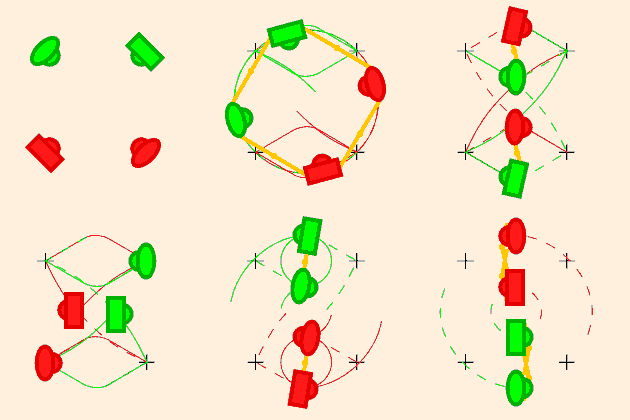
Look at the dance Figure Eight (Running Set)
Ida Levin's Kentucky Square Dances (No. 1)
Ida Levin actually published two slightly different versions of "Do-si-do". The first is designed to be danced when the traveling couple reaches the last stationary couple, while the second is the main figure of its dance.
Ida gives both calls and an interpretation of those calls:
- Out to the right and circle four once around.
- Partners join left hands and swing half around.
- Give opposite your right hand and dance all the way around.
- Promenade, both hands joined.
Which means...
- First couple walks to the last couple, all four join hands in a circle and walk to the left completely around.
- Partners then join left hands and change places.
- Each gentleman joins right hands with the opposite lady and swings her completely around.
- Each gentleman takes his partner on his right and joins both hands crossed with the right above the left. The visiting couple passes to the right of the other one, around behind that couple's place and back to its own place in the circle. Simultaneously the other couple describes a circle following the visiting couple and finishes by turning into its own place.
Note that when Ida says "swing" she does not mean the modern partner swing in ballroom position, but a simple hand turn.
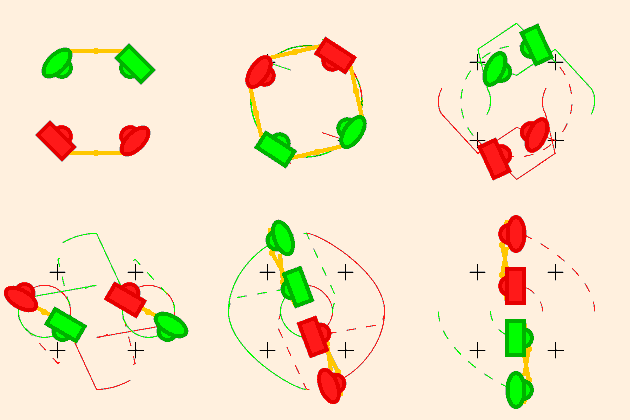
Look at the dance Figure Eight (Kentucky Squares)
Ida Levin's Kentucky Square Dances (No. 2)
Ida Levin actually published two slightly different versions of "Do-si-do". The first is designed to be danced when the traveling couple reaches the last stationary couple, while the second is the main figure of its dance.
Ida gives both calls and an interpretation of those calls:
- First couple go to the couple on the right.
- Circle once around.
- Swing opposite clear around.
- Partner by the left and swing clear around.
- On to the next.
- Next couple out to the right.
- Swing home, corners too.
and meaning...
- First couple walks to the couple on the right.
- These four make a circle as follows: the first man gives his left hand to his partner and his right hand to the second lady. The second gentleman gives his left hand to his partner and his right hand to first lady, which bings both gentlemen with their back s to the center of the circle. In this position they walk to the gentlemen's right completely around.
- First gentleman, joining right hands with the second lady swings her completely around. Simultaneously the second gentleman joining right hands with the first lady swings her completely around.
- Partners, joining left hands swing completely around.
- First couple repeats 2, 3 and 4 with the next couple on the right.
First couple continues in this manner until it has danced with all save the last couple, with whom it daces Do si do (No. 1)- When the first couple moves on to the fourth couple the second couple simultaneously walks to the couple on its right and repeats 2, 3, 4 and 5.
Repeat this figure until all the couples have danced.- Each gentleman, joining both hands with his partner swings her once around, then joining both hands with the corner, that is, the lady on his left, swings her once around.
Note that when Ida says "swing" she does not mean the modern partner swing in ballroom position, but a simple hand turn.
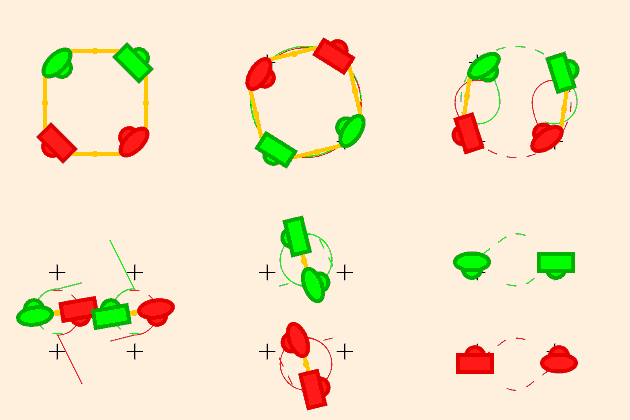
Look at the dance Do Si Do (Kentucky Squares)
Neva Boyd and Tressie Dunlavy's Old Square Dances of America
This "do-si-do" is also designed to be danced when the traveling couple has finished with a stationary couple and is ready to move to the next.
Two couples join hands in a circle and walk to the left (4 counts). They pass through as in Right and Left Through, (2 counts). Partners then join left hands and walk past each other, releasing their hold as they pass, but do not turn (2 counts). Each gentleman joins right hands with the opposite lady and turns her completely around (4 counts). He then joins left hands with his own partner and turns her round onto his right (4 counts).
If the couples will practice walking through this slowly at first, they will soon be able to dance the figure without consciousness of the number of counts
Boyd adds a comment that instead of the final promenade to places, the dancers may choose to do a (modern) partner swing to get to places.

Lloyd Shaw's Cowboy Dances
Lloyd Shaw has the traveling couple dance do-si-do after every encounter with another couple (rather than just the last one).
At the end of a circle the hands break, ladies pass between neighbor and the other lady (ladies passing dos à dos), back to her partner who takes her left hand into his left then she turns round behind him, eventually dropping hands. He remains facing the other gentleman as she circles counter-clockwise around him.
Now each takes his/her neighbor of the opposite sex by the right hand and the ladies circle clockwise around their neighbors (the gents continue to face and drop right hands when they need to).
Then each takes partner left in left ending in a courtesy turn hold. The traveling couple can move on to the next this way.

An article of the Square Dance History Project by Lee Owens (1954) claims that this was the original do-si-do, or at least the original one which wasn't just a simple back to back.
Look at the dance Him and Her
Smoky Mountain Square Dances
Hendrix lived in Tennessee; his booklet Smoky Mountain Square Dances was published in 1941. He describes do-si-do as:
DO-SI-DO
LADIES DO-SI-DO
This figure is executed by passing your partner through the circle 4 to the left and all the way around the gent, counterclockwise, holding his partner with his right hand and raising it to pass his arm over his own head. Each of the gents pass their partners around simultaneously. Each gent will be facing his corner lady as she comes around ... he gives the corner lady his right hand, turning her halfway round clockwise. This faces each gent back in the direction from which he started.
"GENTS YOU KNOW"
Gents give each other their left hand and turn each other halfway round counterclockwise to face in the other direction again. Gents are now facing their corner ladies -
"SWING YOUR CORNER, NOW YOUR OWN"
The gents each make half turn to the left and swing the "CORNER" lady by placing his right arm around her and swings her clockwise one and one-half times. "This is very important" because, if they swing exactly one and one-half turns, each gent and lady will face right at the end of the swing and they will each be facing their partner and read to execute the next part of the call.
Each gent then swings his partner clockwise in exactly the same manner as before; the even numbered couples will now be on the inside of the circle facing counterclockwise to the grand circle and they promenade (dance) ...
This figure implies that it starts from a circle and ends with a promenade, though the two appear to be considered separate calls.
I find the turn "turn halfway" a little confusing. To me it means that the two people turning halfway should end up in each other's places, but Hendrix seems to mean that the two should end where they started but facing in opposite directions.

Let's Square Dance
Chadwick was a professor at Vanderbilt (Tenn); his booklet Let's Square Dance! is undated, but presumed by the square dance history project to be late 1940s. He describes do-si-do as:
Calls:
- Circle left; now right.
- Hens in the bread tray,
Picking out dough.
Lefts to your partner
And Do si do.- Gents you know.
- Swing your corner,
- Now your own and go.
Description: At the call "do-si-do" each gentleman drops his corner's hand and joins lefts with his partner. He hand-swings her half around and as he releases her he grasps his corner lady's right in his right. After swinging their corner ladies half around the two gentlemen swing with lefts. The latter is done at the call gents you know. The change figure now completes the performance.
"The change figure" is just swing corner, swing partner (and this I think is a waltz position swing, not a hand turn).
I assume when "the two gentlemen swing with lefts" that they also do a half swing, though he doesn't say so.
Note that this version does not include a promenade afterward.
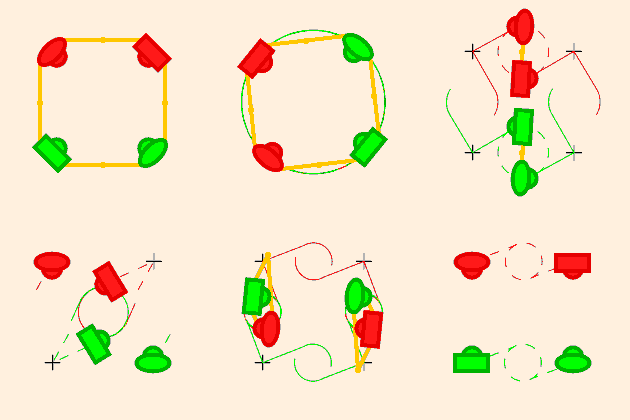
Kentucky Mountain Square Dancing
Patrick Napier describes two styles of "Do-si-do" in his booklet Kentucky Mountain Square Dancing; one of these is simply reprinting Sharp's description, but the second is different:
After a figure is danced by two couples the call "do-si-do" is given by the caller. The two couples face. The gent's partner is on is right with her left hand in his right hand. The gent allows the lady to pass in front of him, around behind hime and back to her place (both couples do this at the same time). The partners hold hands through part of this figure and drop hands when the lady is passing behind the gent. The gent then swings his corner (opposite) lady with a two-hand swing once around and then swings his own partner once around. The leading couple goes on to the next couple while the other couple (the "second" or "number two", or "even" falls back into their original place in the set.
Note that this version does not include a circle beforehand, nor a promenade afterward.
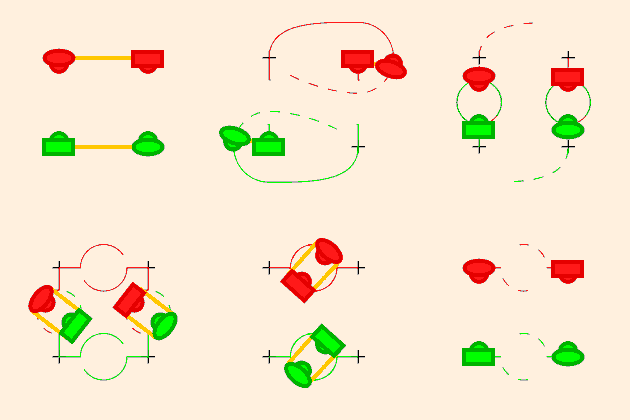
Modern Western Square's Do Paso
This is a version of "Do-si-do" which Lloyd Shaw found in El Paso, so he named it Do Paso. It's the only form that has made it Modern Western Square Dancing, I'm not sure how accurately the modern call reflects the original from El Paso.
For a description of this I refer you to Taminations
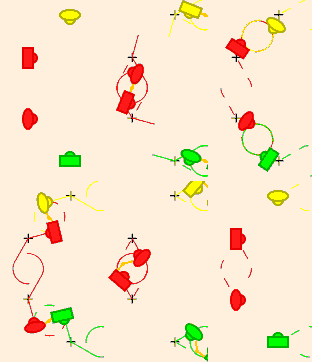
Look at the dance This Old Riverboat
See Also
This website is copyright © 2021-2026 by George W. Williams V My work is licensed under a Creative Commons Attribution 4.0 International License. Most of the dances have more restrictive licensing, see my notes on copyright, the individual dance pages should mention when some rights are waived.