

Renée Camus (website)
| Dance Title | Type | Deviser (or Editor/Publisher), Date, Interpreter | Music Performers | Formation |
|---|---|---|---|---|
| Choreograffiti |  | Renée Camus 2026
|  | Duple Minor |
Victor Skowronski (website)
| Dance Title | Type | Deviser (or Editor/Publisher), Date, Interpreter | Music Performers | Formation |
|---|---|---|---|---|
| Companions | | Victor Skowronski 2003
| Bare Necessities | Duple Minor |
| Number of dances | Number of versions | Number with music |
|---|---|---|
| 2 | 2 | 1 |
Warning: The figures for each dance is generated programmatically by regular expression matching and may be in error. Also, for old dances, they reflect the figures used by the interpreter which may not match those of the deviser.
Chevron
Bars: 4.
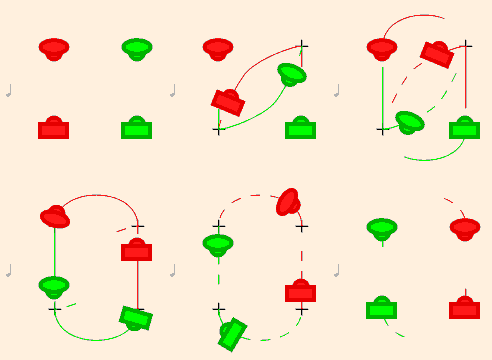 In a chevron one set of corners (here the first corners) will cross the set, then second corners cast into the first corners’ positions while the first corners back up into the second corners’ positions.
The cross may be by either the right or left shoulder. If right the other people will cast right, if left the others will cast left. (the example shows a right cross and right cast).
History
The Chevron was invented by Fried de Metz Herman, and the earliest dance I have found using it is Astoria Lass which was written in 1992.
See Also
This website is copyright © 2021-2026 by George W. Williams V My work is licensed under a Creative Commons Attribution 4.0 International License. Most of the dances have more restrictive licensing, see my notes on copyright, the individual dance pages should mention when some rights are waived.