

Early Sources of RSCDS dances
None of the dances published by the RSCDS before book 13 were devised by the RSCDS, instead they were considered "traditional" dances. Many dances published in subsequent books fall into that category as well. I have tried to track down the sources of these dances and display here the earliest published versions of the dance's figure which I've been able to find.
In some cases the RSCDS mentions a source. Often I have found earlier examples of the dance. Sometimes I have been unable to find the RSCDS source and will present the earliest source I have found.
When I know the deviser, I mark the name in italics. In most cases for these old dances I only know the publisher.
When a dance source is marked with "†" it means I have been unable to verify the source of the dance, when it is marked with "‡" it means I have been unable to find any Scottish dance manual containing this dance (prior to 1924).
Hovering the mouse over a dance's devisor/publisher will (often) produce a popup containing the text of the original.By default the list below shows only traditional dances interpreted by the (R)SCDS. I believe that Book 34 (1986) was the last book to contain any traditional dances. Before Book 13 all (R)SCDS dances were traditional, but Book 13 contains The Reel of the 51st Division, the first published modern dance. No further modern dances were published until Book 22 (1963), and after that some books contained modern and some traditional dances until Books 31&34, which contains both.
At the end I have several tables of statistics.
Order by:
Include:
(R)SCDS Book Range:
Containing figure:
(R)SCDS Book 2, 1925
| The Haymakers ~ RSCDS | Thompson, London, ~1770 Thompson's Compleat Collection of 200 Favourite Country Dances, Vol II
In A Pocket Companion, for Young Ladies and Gentlemen..., Smyth, 1830 calls the dance The Haymakers and writes: The top Lady and bottom Gentleman advance to the middle, and turn by the right hand: the first Gentleman and last Lady do the same. The same couple repeat the same with the left hand, These again repeat the same by both hands. The first two advance and pass back to back, and return to their places. The other two do the same. The first Lady and bottom Gentleman advance, bow and curtsey, and return to their places; the others do the same. The whole chassé from top to bottom. the first couple half pousette with each couple till they reach the bottom of the Dance. In Ball-Room Guide: A Manual of Dancing, H. D. Willock, 1868 calls the dance Sir Roger de Coverly, or The Haymakers and writes:
In Kate Hughes's manuscript from Dundalk Ireland, 1867 it is also called "Hay Makers".
| |||||||||||||||||||||||||||||||||||||||||||||||||||||||||||||||||||||||||||||||||||||||||||
| La Tempête ~ RSCDS | Lowe, Edinburgh, ~1850 Lowe's Selection of Popular Country Dances ▶ In the US, (R)SCDS Book 2 is out of copyright, I am not sure of the legal status in other countries. If you click here then you assert that you have a legal right to view the text.  The couples stand in fours across the room, all facing the top, except the first two couples, who face down. Women on the right of their partners (See Fig.)
Collected locally. (I believe this to be the original text as printed in 1925, subsequent revisions of the book use different words but describe the same figure.) If you look at the Scottish Country Dance Database and Dictionary they both claim the four face four version of the dance should be done round the room as well, but the book shows a longways dance with four lines of two couples each, not a round the room dance. In his The Modern Dancing Master, Chivers, London, 1822 describes dancing four face four dances round the room. He calls this a Chivonian Circle. The (R)SCDS did not say how many times the dance should be repeated. For a four line dance the traditional number would be nine repetitions leaving everyone where they started, but the SCDS is more likely to follow their own methods and only repeat the dance 8 times (leaving the bottom two lines in the wrong places). In it's 2008 revision of Book 2, the RSCDS attributes this dance to Lowe's Selection of Popular Country Dances, ~1850. Lowe actually publishes two different figures, one which he teaches and which he claims to be the original version, and one which everyone else in Edinburgh dances. Lowe's "Original" version is unlike any other version I've found (nobody else has the dancers clapping, ever), while the other version seems more like the other contemporary versions I've found. The (R)SCDS chose Lowe's "Original" as the basis for their dance. Lowe writes:
I think Lowe wants the top couples to pass under the arches made by the bottom as couples, rather than passing by the right, as is the modern method. Lowe also has people do a couples mad robin along their own line, rather than a couples do-si-do with the people opposite. Joseph Lowe did not suggest dancing it as a round the room dance. The earliest source I have for that is in Albert W. Newman's A Complete Practical Guide to Modern Society Dancing, Philadelphia, 1903 who wrote:
He, like the (R)SCDS, only recommends the round the room format when the set is a standard improper duple minor rather than a four face four. Despite the RSCDS's claims, this dance, and the idea of dancing in a four face four (Mescolanze) formation, predate Mr. Lowe. The earliest version I have found was published by Kattfuß in Germany in 1802. According to The Regency Dance site Joseph Binns Hart published "Hart's 2nd Set of Quadrilles" sometime between 1818 and 1820. In this work he has a dance called Hart's Tempete Dance which was a dance with two couples facing two other couples (a rare formation for cotillions, but not unknown), however unlike cotilions (or quadrilles) Hart's dance progresses. In his Hart's Second Set of Quadrilles, Hart writes: Form a line of 4, the 2 Ladies on the 2 Gentlemens right, 4 more opposite to the first 4, form lines of 4 behind the 2d. line as many as intend to dance. Then in ~1825 GMS Chivers published a dance called La Tempête in his "Dancing Master in Miniature". The Contrafusion site says the dance was originally European and dates it back to 1802. In the US, the earliest source I can lay my hands on is from New York in the US in 1851, which was a mescolanze (but not a round the room dance) Mr. Whale & Daughter published La Tempète, as danced at the Queen's Last Ball This popular Dance is danced by any number of double couples standing as above at commencement. All begin together, — Advance and retire twice, — Partners together gallop across eight steps each way, — Advance and retire twice, — Hand four round in the centre, (as above) Sides the same turning with both hands, — Hands across, (as above) Sides the same, — Advance and retire once, — Go forward to dance with next vis a vis. Also in 1851, also in New York, Burnton published The Original Tampete
I have a page devoted to a more complete history of this dance.
|

(R)SCDS Book 3, 1926
| Blue Bonnets ~ RSCDS | Goulding & D'Almaine, London, 1827 Goulding & D'Almaine's Twenty-four Country Dances for the Year 1827 The RSCDS attributes this to Mozart Allan's Allan's Reference Guide to the Ball-Room, Glasgow, ~1895, and a dance with this name and figure is in that work, but it occurred elsewhere earlier. Published by Goulding & D'Almaine in 1827 as Blue Bonnets are over the Border. I do not have access to the original text. but Robert Keller gives the figures as: Smyth, in 1830, page 31, calls it Blue Bonnets Over the Border and writes: First Lady and second Genlemen advance and retire, and pass back to back, the first Gentleman and second Lady the same Down the middle and up again, and poussette. So where is the progression in this dance? Either in the poussette or in "down the middle and up again". If you look at Mrs McLeod (page 33) you will see that, for Smyth, "down the middle and up again" is progressive. Smyth (an Edinburgh dancing teacher) classifies this as a "Scotch Country Dance".
| |||||||||||||||||||||||||
| Foursome Reel ~ RSCDS | W. Smyth, Edinburgh, 1830 A Pocket Companion for Young Ladies and Gentlemen Containing Directions for the Performance of Quadrilles, Scotch, English, Irish, French, and Spanish Country Dances, Reels, &c. This dance was probably danced for about a hundred years before anyone bothered to publish it. The earliest Scottish source I can find is Smyth in 1830 who writes: At the commencement, the Gentlemen place their partners at the end of the room, and stand either before or beside them.— If before them, all four begin at once, but if otherwise the Ladies must begin first, each person describing the figure eight, and the Gentlemen set to the Ladies alternately. The Lowes in ~1831 write: Before commencing the Reel of Four, the Gentlemen place their partners upon opposite sides of the room, or at the ends, and stand either before or beside them; if before them, all the four must begin at once; but if otherwise, the Ladies ought to begin first; each person describes the figure of eight, and the Gentlemen set to the Ladies alternately. Arthur Miller, Leeds, 1900 writes:
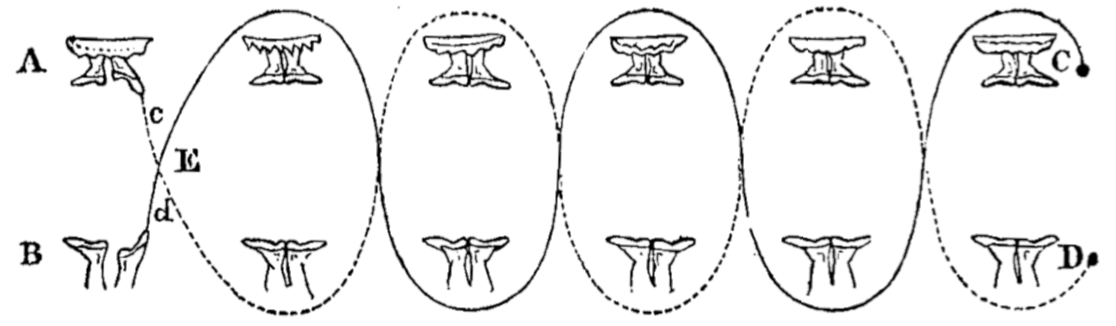
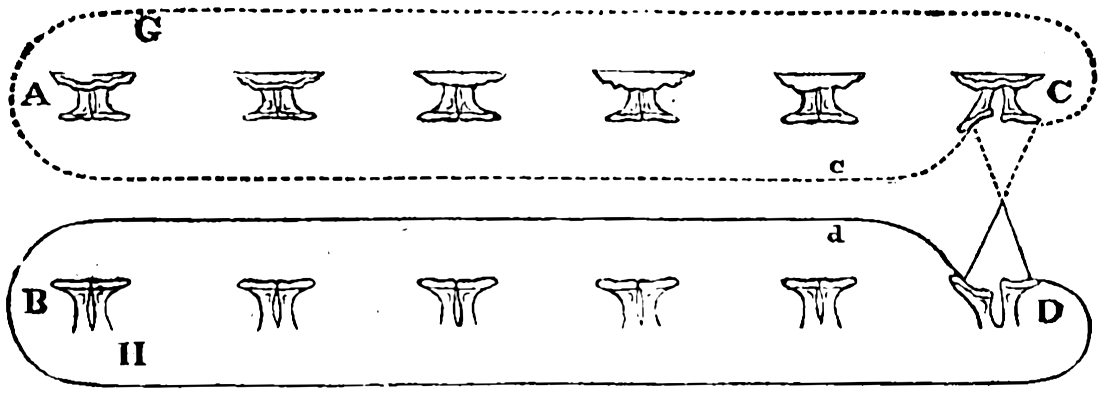
Unfortunately this description is misleading. The figure of a reel for four people is not a figure eight, it's a figure eight with an extra loop. The Fletts kindly point this out. The Fletts also mention that the reel should be performed "giving shoulders", that is when passing someone of the opposite sex in the reel the shoulder closest to that person should lead (so the dancers are almost back to back), while when passing someone of the same sex the outside shoulder should lead (so the dancers are almost face to face). The RSCDS says nothing of this, but doesn't say not to do it either... Although the glory of the dance is in the various setting steps used, the arms were also involved. The Fletts say that the most common position was for the dancers to hold their arms akimbo. Though the gentlemen often raised their arms (one, or both, or alternating), and the ladies sometimes raised theirs, and sometimes used them to hold their skirts out. The earliest written description of the dance actually comes from Thomas Wilson's Analysis of Country Dancing, London, 1808 (page 120). His version is rather different. It starts with two facing couples, each couple turns (I presume a two hand turn), and then everyone turns their opposite, that repeats (turn partner, turn opposite), then the 1st couple crosses in between the second and hey with them. On the second iteration the 2nd couple cross to hey with the 1st.
|
(R)SCDS Book 5, 1929
| Cold and Raw ~ RSCDS | Henry Playford, London, 1689‡ A new Addition to the Dancing Master The RSCDS attributes this to the 9th edition to the Dancing Master. This dance has a rather confusing history in the Dancing Master. In 1651 (the first edition) Playford called essentially the same tune "Stingo, or The Oyl of Barly". This dance had a completely different figure though. Then in 1689 addition to the 7th edition he published two dances with different figures but the same tune: "Juice of Barley" and "Cold and Raw". In the 9th edition (1695) the dance originally titled "Juice of Barley" became "Cold and Raw". The original "Cold and Raw" disappeared from the 9th through the 16th editions, and then reappeared as "Cold and Raw" in the 17th edition (1721) while the "Juice of Barley" figure then vanished. The RSCDS version appears to be based on the "Juice of Barley" figure. Playford writes: The 1. cu. go back to back with their Partners, and the 2. cu. do the same at the same time. Although Playford explicitly specifies a two hand turn, the RSCDS has chosen to do a right hand turn.
|
(R)SCDS Book 7, 1931
| Menzies Rant ~ RSCDS | Castle Menzies, Scotland, 1749 The Register of Dances at Castle Menzies Quoted from The Register of Dances at Castle Menzies (as transcribed by Jim Healy): 1st man turns 2d woman & casts off, then the 1st woman does the same then the 1st pair goes figure of eight through the 2d pair; then the 1st man sets to the 2d woman & turns her, then the 1st woman the same; then the 1st pair goes four hands round with the 2d pair & right & left |
(R)SCDS Book 12, 1938
| Sodger Laddie ~ RSCDS | Walsh, London, 1731 The Compleat Country Dancing Master vol 1 Walsh writes: The 1st Man Heys with the 3d Cu. his Partner at the same Time heys with the 2d Cu. Then the 1st Man Heys with the 2d Cu. 1st Wo. at the same Time Heys with the 3d Cu. First Cu. leads thro' the 2d and 3d We. and turn in the 2d Cu. Place First Cu. leads through the 2d and 3d Men and turns at Top The 1st Cu. Back to Back and cast off and turn The 2d Cu. does the same First Man leads the 2d Wo. off and turns her First Wo. leads the 2d Man off and turns him, 1st Man cast off at the same Time. Walsh spells the dance "Soldier Ladie" rather than "Sodger Laddie". Walsh uses a 32 bar jig tune repeated twice, while the RSCDS has cut the dance length in half. | |
| The Yellow-Haired Laddie | Walsh, London, ~1737 Caledonian Country Dances. Book the Second RSCDS Book 12 attributes this to Johnson's Caledonian Country Dances of 1748 but it appears earlier. According to Robert Keller's site Walsh published a dance called The Yellow Hair'd Laddie in his Caledonian Country Dances. Book the Second published ~1737. Some years later Johnson published a dance with the same name and figure in his Caledonian Country Dances...ye 3d. Edition with Additions. A copy of this is online. Johnson writes: The 1st. Cu. lead thro' the 2d. Cu. & turn in their own Places, then Back to Back and turn The 2d. Cu. do the same with the 3d. Cu. Then the 1st Cu. cast behind the 3d. Cu. and lead up to the Top and turn then Back to Back and Right Hand & Left to the end of the Tune — The music consists of 2 eight bar strains, both repeated. What to make of The 1st. Cu. lead thro' the 2d. Cu. & turn in their own Places? What are "their own Places"? Sometimes that means their original places, and sometimes it means their progressed places. The RSCDS thinks it means their progressed places (which means the 2s must move up), but the next instruction The 2d. Cu. do the same with the 3d. Cu. suggests that the 2s and 3s are adjacent, which won't happen if the 2s have moved up. RSCDS seems to assume that's a misprint, and that Walsh means "1s" instead of "3s". But if we assume Walsh meant what he wrote we still get a consistent dance. I think The 1st. Cu. lead thro' the 2d. Cu. is probably an abreviation for "1s lead down and cast back to place". We've got 4 bars of music at 3 counts a bar, and even at minuet pacing that's a lot of music just to lead down one couple, but it's about right to lead down and cast up. Then the 1s can do their turns and back-to-back "in their own Places" at the top of the set. And then the 2s can do the same with the 3s. In the second half of the dance Walsh says Then the 1st Cu. cast behind the 3d. Cu. and lead up, but the RSCDS has them casting down 1 couple and leading up, not the 2 couple cast Walsh asks for Some sources say the turns in the first 32 bars should be right hand, and some say both hand. The crib diagram shows the "down the middle" to be with near hands joined but the online instructions say "lead". |
(R)SCDS Book 14, 1947
| Grant's Reel ~ RSCDS | Johnson, London, 1751 A Choice Collection of 200 Favourite Country Dances, Vol. 6th The RSCDS attributes this dance to David Rutherford, but John Johnson published the same figure a few years earlier. He and Rutherford used the same words, and Rutherford is online. Rutherford writes: The first Man sets to the 2d. Wo. & turn her His Partner does the same with the 2d. Man Cross over 2 Cu. Lead up to the Top foot it & cast off · Back to Back with your Partner Right Hand and Left Quite round with the 2d. Couple ·· The instructions as printed by Rutherford do not work, they end with the 1s improper. To avoid this I have changed the cast off at the end of B1 to a cross and cast. The threes are idle. And the "cross 2 couple, lead to top" seems too much to fit in four bars. The dance cries out to be a duple minor (as is done in the Scottish interpretation). |
RSCDS Book 16, 1951
| The Golden Pheasant | Thomas Wilson, London, 1813†‡ Le Sylphe, An Elegant Collection of Twenty four Country Dances, for the Year 1813 A dance with this name was published by Button & Whittaker, but whether it matches the figure I do not know. The RSCDS attributes this dance to the publishers but Wilson was the deviser: see the Regency Dance site's paper on Button and Co. The use of double triangles does suggest Wilson was the choreographer. |
RSCDS Book 17, 1953 (Coronation Book)
| Bob Sanders | Cahusac, London, 1758‡ Cahusac's Twenty Four Country Dances for the Year 1758 |
RSCDS Book 19, 1957
| Two and Two | Thompson, London, 1763‡ Twenty Four Country Dances for the Year 1763 Thompson writes: Set to your partner and turn foot it sides and turn Hands round Back to Back all 4 Gallop down one Cu: up again and cast off |
RSCDS Book 22, 1963
| Minard Castle | W H Gilroy, East Lothian, 1963 RSCDS Book 22 |
RSCDS Book 23, 1967
| The Glens of Angus | Douglas Henderson, Dundee, ~1967 RSCDS Book 23 | |
| The Reivers | Roland Morton Smith, Toronto, Ca, 1967 RSCDS Book 23 |
RSCDS Book 28, 1977
| Euan's Jig | Anonymous, date unknown† | |
| Mrs. Hill's Delight | Nathaniel Kynaston, London, 1710 The RSCDS gives no source to this dance, but it appears to be derived from Nathaniel Kynaston's Mrs. Hill's Dance published by both Walsh and Playford in 1710.
| |
| A Trip O'er the Tweed | John Young, London, 1710 The Dancing Master, Vol. the Second John Young writes:
The Tweed is a river on the border between Scotland and England, flowing into the North Sea. The original is a 24 bar dance with 3 counts per bar; it has been adapted to a 48 bar jig. |
RSCDS Book 29, 1979
| Well Done Jack ~ RSCDS | Nathaniel Kynaston, London, 1718 Walsh's Twenty Four New Country Dances for the Year 1718 Kynaston writes:
|
RSCDS Book 30, 1981
| A Man's a Man for a' That ~ RSCDS | Thomas Wilson, London, 1816‡ A Companion to the Ball Room Wilson writes (page 32): SINGLE FIGURE (Each strain repeated) The music consists of two 4 bar strains. Probably played as a reel rather than a strathspey. The RSCDS is interpretting Wilson's DOUBLE FIGURE Wilson defines most of his figures in his An Analysis of Country Dancing, 3rd Edition.
|
RSCDS Book 31, 1983 (Diamond Jubilee)
| Autumn in Appin | John Drewry, Aberdeen, 1982 RSCDS Book 31 | |
| Scotland ~ RSCDS | Henry Playford, London, 1698 The Dancing Master, 10th ed. Playford's music is a slip-jig consisting of two 4 bar strains, both repeated. Playford writes:
Interesting the the RSCDS is unwilling to use a turn single... |
RSCDS Book 32, 1984
| Miss Nancy Arnott | Graeme Stevens, Kirkcaldy, 1983 RSCDS Book 32 |
RSCDS Book 36, 1990 (Frae A' The Airts, Vol. 1)
| The Argyll Ludging | A. N. Shearer, [Unknown City], ~1990 RSCDS Book 36 | |
| The Whistling Wind | Elizabeth Goossen, [Unknown City], 1984 RSCDS Book 36 |
RSCDS Book 39, 1996
| Joie de Vivre | Irene van Maarseveen, [Unknown City], 1996 RSCDS Book 39 | |
| Le Moulin Rouge | Liliane Chamoin, [Unknown City], ~1996 RSCDS Book 39 | |
| The New Virginia Reel | Anna Holden, [Unknown City], ~1996 RSCDS Book 39 |
RSCDS Book 45, 2005
| The Dream Catcher | Eileen Orr, [Unknown City], 2001 RSCDS Book 45 |
RSCDS Book 46, 2010
| Peggy Spouse MBE | John Wilkinson, [Unknown City], ~2010 RSCDS Book 46 |
RSCDS Book 50, 2016
| The Doonhamer Delight | Rachel Shakland, [Unknown City], 2014 RSCDS Book 50 | |
| Double Trouble Triangles | Judith Kowalczik, [Unknown City], 2016 RSCDS Book 50 |
RSCDS Book 51, 2017
| And For the Young Ones | Anne Dejean, [Unknown City], 2016 RSCDS Book 51 | |
| Come What May | Romaine Butterfield, [Unknown City], 2010 RSCDS Book 51 | |
| Fair Enough | Liza Halpenny, [Unknown City], 2014 RSCDS Book 51 |
RSCDS Book 52, 2018
| Trip to Timber Ridge | Linda Henderson, [Unknown City], 2012 RSCDS Book 52 | |
| The Ullapool Ferry | Pat Houghton, [Unknown City], 2015 RSCDS Book 52 |
RSCDS Book 53, 2023
| Schiehallion | Hugh A Thurston, Vancouver, Ca., 1971 RSCDS Book 53 | |
| Toast to the Mousies | Sara Gratiot, [Unknown City], 2016 RSCDS Book 53 |
RSCDS Book 54, 2025
| Kathy's Fascinator ~ Alternate | Lydia Hedge, [Unknown City], 2020 RSCDS Book 54 | |
| The Tea Pottery | Duncan Brown, [Unknown City], ~2020 RSCDS Book 54 |
Miss Milligan's Miscellany 1, ~1977
| Lady Dumfries | Anonymous, date unknown† | |
| Lady Glasgow | Anonymous, date unknown† | |
| Largo Law ~ Modified | Anonymous, date unknown† | |
| Largo Law | Anonymous, date unknown† |
Miss Milligan's Miscellany 2, ~1977
| The Back O' Bennachie | D. Anderson, Dundee, ~1886 D. Anderson's Ball-Room Guide I have not yet found a copy of Anderson's earlier work but this dance also appears in D. Anderson's Ball-Room and Solo Dance Guide, of 1897, wherein he writes:
On page 117 Anderson claims to be the devisor of this dance. | |
| The Carl cam' ower the Croft ~ RSCDS | Thomas Wilson, London, 1816‡ A Companion to the Ball Room Wilson writes (page 35): SINGLE FIGURE (Each strain repeat) Wilson spells the title as "The Carle came o'er the Craft". The music consists of two 4 bar strains. The RSCDS is interpretting Wilson's DOUBLE FIGURE (The Wilson's poussette and double triangle are completely different from those of the RSCDS). Wilson defines most of his figures in his An Analysis of Country Dancing, 3rd Edition.
| |
| Kelso Races | Anonymous, date unknown† |
Statistics
Number of dances published by city (or region)
| [Unknown] | 23 |
| London | 15 |
| Dundee | 2 |
| Edinburgh | 2 |
| Aberdeen | 1 |
| Castle Menzies | 1 |
| East Lothian | 1 |
| Kirkcaldy | 1 |
| Toronto, Ca | 1 |
| Vancouver, Ca. | 1 |
Number of dances published by semi century
| Unknown | 6 |
| 1650-1699 | 2 |
| 1700-1749 | 6 |
| 1750-1799 | 4 |
| 1800-1849 | 5 |
| 1850-1899 | 2 |
| 1950-1999 | 11 |
| 2000-2049 | 12 |
Number of dances by early publisher/devisor
References
| D. Anderson | D. Anderson's Ball-Room Guide, Dundee, about 1886. May be found at Trinity College Library, Hartford CT, or the National Library of Scotland, or Cambridge University Library |
| Cahusac | Cahusac's Twenty Four Country Dances for the Year 1758, London, 1758. Robert Keller's site says this may be found in the Mitchell Library, Glasgow. |
| Castle Menzies | The Register of Dances at Castle Menzies, Scotland, 1749. Found at the A K Bell Library, Perth |
| Goulding & D'Almaine | Goulding & D'Almaine's Twenty-four Country Dances for the Year 1827, London, 1827. May be found in the British Library |
| Johnson | A Choice Collection of 200 Favourite Country Dances, Vol. 6th, London, 1751. Robert Keller's site says this may be found in the Bodleian Library, Oxford, Harding Mus. |
| Nathaniel Kynaston | Walsh's Twenty Four New Country Dances for the Year 1718, London, 1718. Robert Keller's site says this may be found in the British Library |
| Lowe | Lowe's Selection of Popular Country Dances, Edinburgh, about 1850. May be found in The National Library of Scotland |
| Henry Playford | A new Addition to the Dancing Master, London, 1689 |
| " | The Dancing Master, 10th ed., London, 1698 |
| John Young | The Dancing Master, Vol. the Second, London, 1710 |
| W. Smyth | A Pocket Companion for Young Ladies and Gentlemen Containing Directions for the Performance of Quadrilles, Scotch, English, Irish, French, and Spanish Country Dances, Reels, &c., Edinburgh, 1830 |
| Thompson | Twenty Four Country Dances for the Year 1763, London, 1763. Robert Keller's site says this may be found in the British Library |
| " | Thompson's Compleat Collection of 200 Favourite Country Dances, Vol II, London, about 1770. Found in the Vaughan Williams Memorial Library (EFDSS, Cecil Sharp House). |
| Walsh | The Compleat Country Dancing Master vol 1, London, 1731. Robert Keller's site says this may be found in the British Library |
| " | Caledonian Country Dances. Book the Second, London, about 1737. Robert Keller's site says this may be found in the National Library of Scotland, Edinburgh |
| Thomas Wilson | Le Sylphe, An Elegant Collection of Twenty four Country Dances, for the Year 1813, London, 1813. I don't know where to find it. |
| " | A Companion to the Ball Room, London, 1816. Robert Keller's site says this may be found in the British Library |
Scans of old dance manuals are scattered about the internet. The Vaughan Williams Memorial Library, International Music Score Library Project, Scott Pfitzinger's Playford site, Richard Powers' website, Library of Congress, and The Library of Dance all provide primary sources. A number of other sites provide indeces of these sources: The Regency Dance site, The Library of Dance again, and my own site have all proven useful for finding old sources. Finally there is Robert Keller's index which does not provide sources directly but lists thousands of dances, the publications containing them, dates and a brief coded description of the figures. This last has proven invaluable for tracking down dances for which I had no complete sources.
And, of course, both the Scottish Country Dance Database and the Scottish Country Dancing Dictionary provide online descriptions of all the RSCDS books and often hint at early sources.
This website is copyright © 2021-2026 by George W. Williams V My work is licensed under a Creative Commons Attribution 4.0 International License. Most of the dances have more restrictive licensing, see my notes on copyright, the individual dance pages should mention when some rights are waived.