

Back To Back
Also known as: Do-Si-Do, Do-Sa-Do, Docey-doe, Dos à Dos.
Bars: 4.
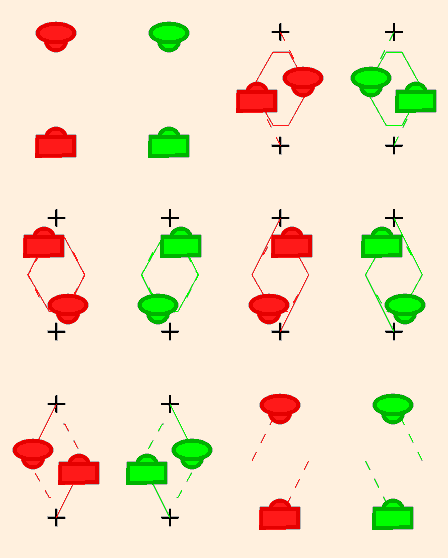 In a back to back you start facing the person you are doing the back to back with and you continue facing that same way throughout the figure. Do not turn around. You walk forward, passing the other person by the right shoulder, go a little further, cross behind their back, and then back up (passing left shoulders this time) until you are back where you started.
Variants
Left back to backs by themselves are rare but do happen. Mirror back to backs also pop up from time to time. In the example the 1s are doing a right back to back and the 2s are mirroring this and doing a left back to back at the same time. The call for this would be something like “Partner mirror back to back women in the middle at start”.
History
In 1651, Playford says in Cuckolds all a Row: goe about the Co. We. not turning your faces, which seems a reasonable description of the figure.
In the Lovelace MS's description of the same dance, things are not quite so clear: each man shall goe round about his owne woeman but it certainly could be describing a back to back. Neither says what the woman does, that's normal for this period. It could be just the man doing the figure, or both.
The first use of "back to back" for this figure may be in Mulberry Garden, Playford, 1670: Go back to back with your own wo. the 2. cu. doing the same.
In 1752, Nicholas Dukes defines back to back with Feuillet diagrams.
When this call was translated into French it became “dos à dos” and when that came back into English it was “do-si-do”.
In Western Square Dancing of the 1940s the term "do-si-do" was reserved for what I call "do-si", while "do-sa-do" meant the standard back to back figure.
Some dances which (probably) use this figure
- Dances for which I have animations
- Dances in (R)SCDS Books
Note: This list may be incorrect or incomplete.
See Also
This website is copyright © 2021-2026 by George W. Williams V My work is licensed under a Creative Commons Attribution 4.0 International License. Most of the dances have more restrictive licensing, see my notes on copyright, the individual dance pages should mention when some rights are waived.